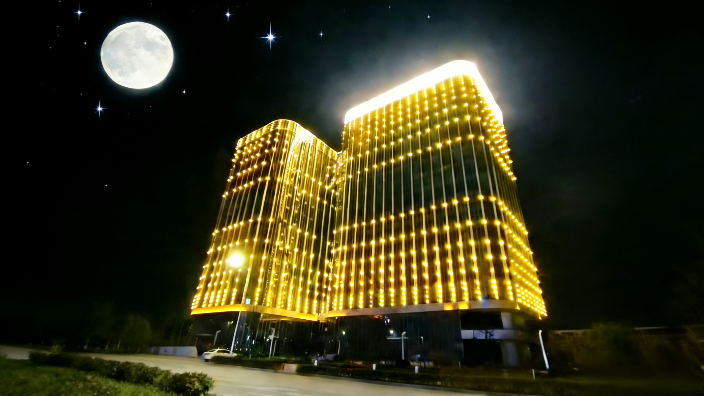
Hotel Lighting: Comfort Meets Colour
Good hotel lighting works on two levels: warm, welcoming light where guests arrive, and colour-changing outlines above that make the building visible from afar. One DMX512 system runs both.
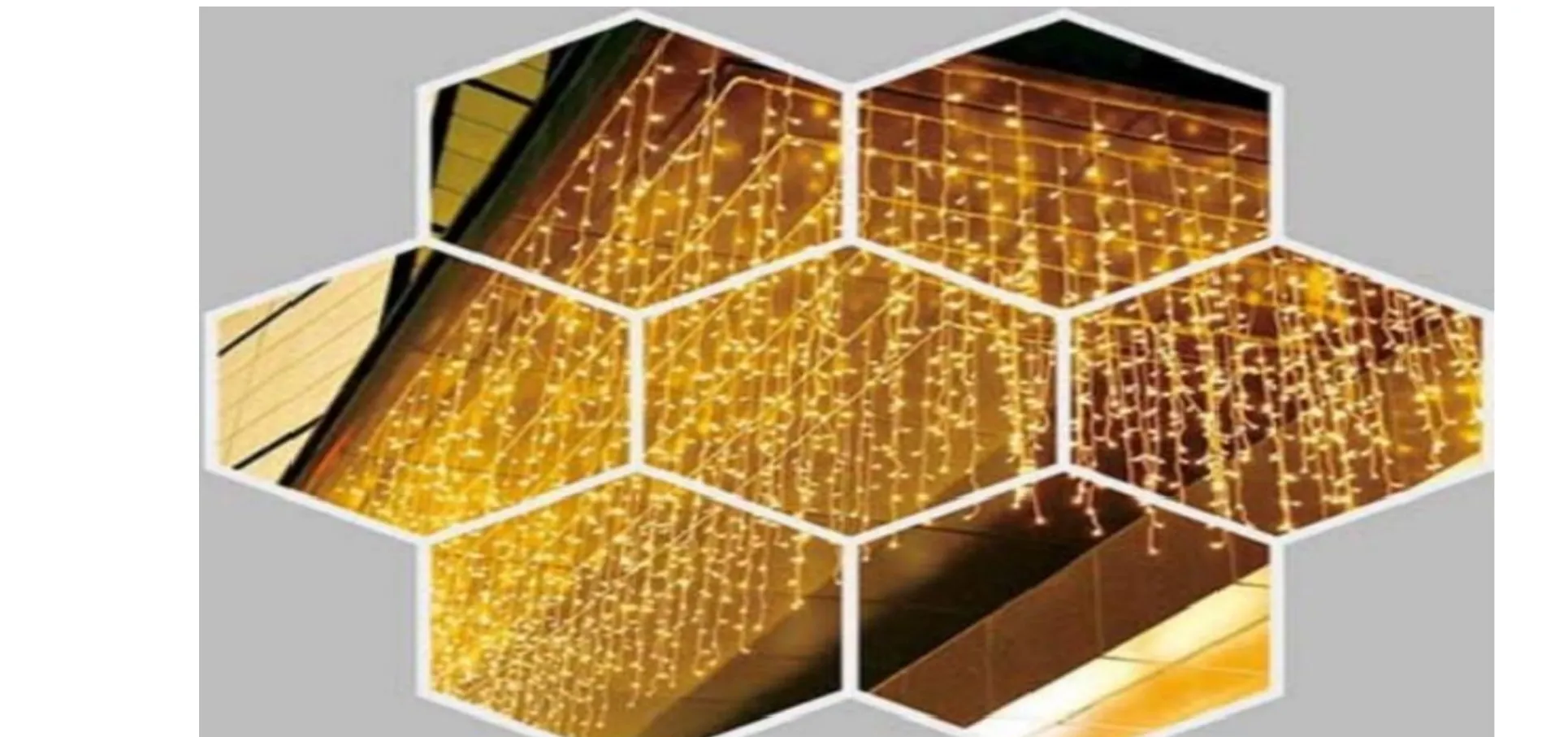
Good hotel lighting works on two levels: warm, welcoming light where guests arrive, and colour-changing outlines above that make the building visible from afar.
A hotel is two things at night: a place to arrive at, and a landmark to look at. The lighting has to do both jobs at once, and the two levels need different light.
Level one: warm light where guests arrive
The entrance, the driveway, the lobby front and the pathways need warm, welcoming light. Guests should feel comfortable and safe, see where they are going, and get a good first impression. Warm white light — around the lower end of the colour temperature range — does this best. It flatters people and materials, and it says "welcome" in a way cold white light never does. In-ground lights, step lights and warm string lighting work well here, all weatherproofed for outdoor use.
Level two: colour above
Above the entrance, the building itself becomes the sign. Colour-changing outlines along the facade, the roofline and the signage make the hotel visible from afar — from the street, from the highway, from across the city. This is where RGB wall washers, linear lights and pixel points earn their keep: a warm white wash for an elegant evening, a brand colour for identity, or a festive scene for a holiday. With DMX512 control, the whole building can change scenes together, on a schedule or for a special event.
Making the two levels work together
The trick is one control system for the whole building. When the warm ground-level light and the colour-changing facade run from the same controller, the hotel can shift moods as the evening goes on — welcoming at arrival, striking from a distance — without anyone touching a switch. Scenes can be programmed once and run automatically every night.
Energy efficiency matters too: a hotel facade runs every night of the year, so LED fixtures — efficient, long-lived and easy to control — keep the running cost down while the building stays lit.
The UTU range
Shenzhen Utu Lighting covers both levels from one catalogue. For the building above: wall washers such as the UT6001 (18W/24W/36W, 1800K–10000K/RGB, IP65/IP68) and pixel points such as the UT8801 (5–9W, IP65) for the facade, roofline and signage. For the ground below: in-ground lights such as the UT8101 (1–3W, IP65, Ø75×H100 mm) for pathways and the entrance, step lights such as the UT9101 (3W, IP65) for stairs and walkways, and string lights such as the UT-ALS01 adhesive string and UT-OLS01 ordinary string (RGB, DC12V/DC24V/AC110V/AC220V) for trees, courtyards and festive decoration. Every project gets a free lighting design with a realistic lighting-effect rendering and free RGB/DMX programming, so the hotel sees its finished night scene — and its quotation — before anything is made.
Frequently asked questions
What colour temperature should a hotel entrance use?
Warm white — the lower end of the range. Warm light is comfortable and welcoming, and it flatters people and materials in a way cold white light does not.
Can the facade change colour for holidays or events?
Yes. RGB wall washers and pixel points with DMX512 control can run a brand colour, a festive scene or a seasonal programme, and scenes can be scheduled to run automatically.
Which fixtures light the entrance and pathways?
In-ground lights such as the UT8101 (1–3W, IP65) for pathways, step lights such as the UT9101 (3W, IP65) for stairs and walkways, and string lights such as the UT-ALS01 and UT-OLS01 (RGB) for trees and courtyards.
Do you design the whole hotel lighting?
Yes — a free lighting design with a realistic lighting-effect rendering and free RGB/DMX programming, so the hotel sees its finished night scene — and its quotation — before anything is made.