News & Insights
LED Wall Washers: How to Choose Power, IP Rating and Control for Your Facade
LED wall washers: how to choose the right power, IP rating and DMX512 control for your facade — with UT6001–UT6010 specs and a practical selection guide.
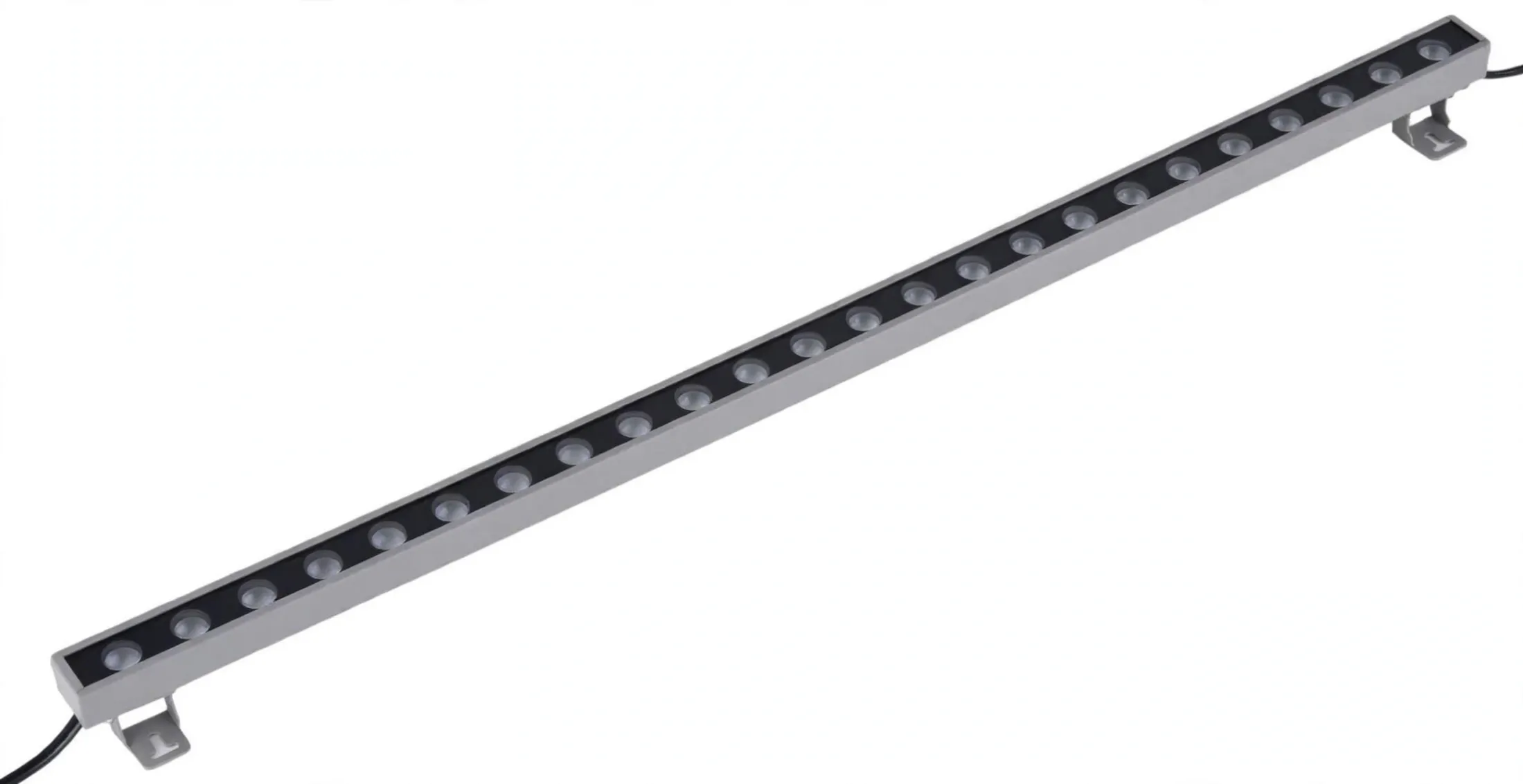
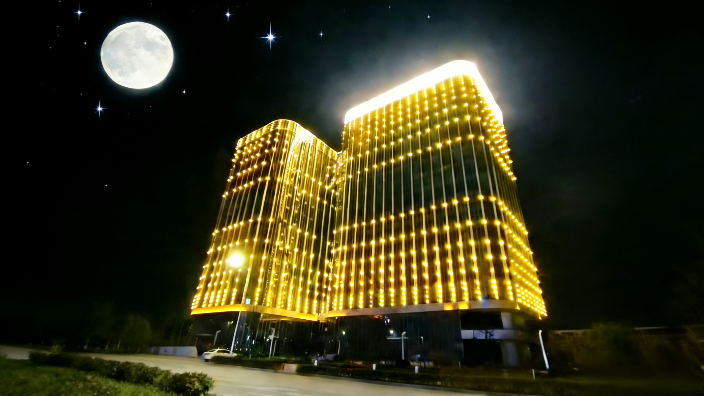
A wall washer is the workhorse of facade lighting: a linear fixture that throws an even sheet of light up or down a flat surface, turning a plain wall into a lit elevation. Choosing the right one comes down to three decisions — power, IP rating and control. This guide covers each one with UTU's wall washer range, UT6001–UT6010, so you can specify the right model the first time.
Power: 18W, 24W, 36W — and up to 144W
Power decides how far the wash reaches and how bright the facade reads. UTU's wall washers run 18W/24W/36W as standard, with larger models such as the UT6007 and UT6009 available at 36W/48W/72W — and higher-power models up to 144W for the largest facades. Most models are 1000 mm long, with shorter lengths of 700 mm, 500 mm and 270 mm also available, in DC24V or AC220V, aluminium + tempered glass.
The rule is simple: the taller the facade, the more power the wash needs. An 18W unit suits a low wall, a shopfront or a single-storey elevation, where the wash only has to travel a short distance. A 24W or 36W unit suits a multi-storey facade, where the light must climb several metres and still read evenly from the street. The 48W and 72W models are for the tallest elevations and the widest surfaces, where a single run has to cover a large area without going patchy — and 144W models cover the largest facades.
Before ordering, measure the height of the surface the washer has to cover. That one number — the height of the wall — settles the power more reliably than any other factor. A washer that is too weak leaves the top of the facade dark; one that is too strong wastes power and budget on a wall that does not need it.
IP rating: IP65 for most facades, IP68 for exposed and waterside positions
Wall washers live outdoors, so the IP rating matters. Most UT6001–UT6010 models are IP65 — dust-tight and protected against water jets, which covers rain, splashing and pressure washing on a normal facade. Selected models — the UT6003, UT6004, UT6005, UT6008, UT6009 and UT6010 — are IP68, built for continuous immersion and for positions that face the worst weather.
Choose IP65 for a standard facade: it is the right rating for rain and weather, at the right cost. Choose IP68 when the washer sits in an exposed position — a waterside facade, a location that floods, or a run that faces driving rain and standing water. The IP68 models use the same aluminium + tempered glass construction, so the choice is about the location, not the look.
Do not over-specify: an IP68 washer works fine on a normal facade, but it costs more than the IP65 equivalent, and on a standard wall that money buys more light, not more protection. Match the rating to the wettest condition the fixture will face.
Control: DMX512 RGB for colour-changing facades
Wall washers are DMX512 RGB. That means each unit can run a single colour, a gradient, or a full colour-changing scene, all synchronised across the facade from one controller. A building rarely runs one look all night: a warm white for the evening, a brand colour for identity, a festive scene for a holiday. With DMX512 control, those scenes are programmed once and run on a schedule, automatically, every night.
If your project mixes wall washers with pixel points and linear lights, the shared DMX512 control is what makes the whole building change scenes together — the wash, the outlines and the dots all running from one system. That is the practical reason to specify DMX512 across the whole facade, rather than mixing control methods.
Colour temperature is 1800K–10000K plus RGB across the range. Warm white from 1800K suits hotels and hospitality; cool white up to 10000K suits commercial facades; full RGB colour sits on top for branding and festive scenes. One range covers all three, so a single order can serve a hotel entrance, an office tower and a shopping centre.
Planning the run: length, power supply and mounting
Most models are 1000 mm long, so a run is usually planned in metre sections — with 700 mm, 500 mm and 270 mm lengths available to fill shorter gaps or fit tighter details. Measure the width of the facade, divide by the unit length, and the number of units follows. Power is DC24V or AC220V depending on the model, so the power supply and the controller are planned per run, not per fixture: one supply feeds a run, one controller drives the scenes.
Mounting is by bracket, with the fixture set back from the wall at a distance that suits the wash height — closer for a short wash, further back for a tall one. Before ordering, check three things: the height of the surface against the power, the total run length in metres, and whether the position needs IP65 or IP68. With those three answers, the order writes itself.
Frequently asked questions
Which power should I choose for my facade?
18W for low walls and single-storey elevations; 24W or 36W for multi-storey facades; 48W or 72W (UT6007, UT6009) for the tallest elevations and widest surfaces, and up to 144W for the largest facades. Measure the height of the wall first — that settles the power.
Do I need IP65 or IP68?
IP65 for a standard facade — rain and weather. IP68 (UT6003–UT6005, UT6008–UT6010) for exposed, waterside or flood-prone positions. Match the rating to the wettest condition the fixture will face.
Can wall washers run colour-changing effects?
Yes. Wall washers are DMX512 RGB, so they run single colours, gradients and synchronised colour-changing scenes from one controller, together with pixel points and linear lights.
How do I plan the number of units?
Most models are 1000 mm long, with 700 mm, 500 mm and 270 mm lengths also available. Measure the width of the facade and divide by the unit length — that is the number of units per run. Power is DC24V or AC220V; plan one supply per run.